
Walking Around

Cassino is the center of a wider territory that includes the Comino Valley, the Abruzzo, Lazio and Molise National Park, the Coast of Ulysses, part of the province called “Ciociaria”, and part of the Molise region. This territory is rich in history, natural attractions, culinary specialties, outstanding traditions, and more; it is recommended to live all these experiences calmly, enjoying all the details and aspects, stopping at listening to the voices of unspoiled nature or the deafening silence of the war places.
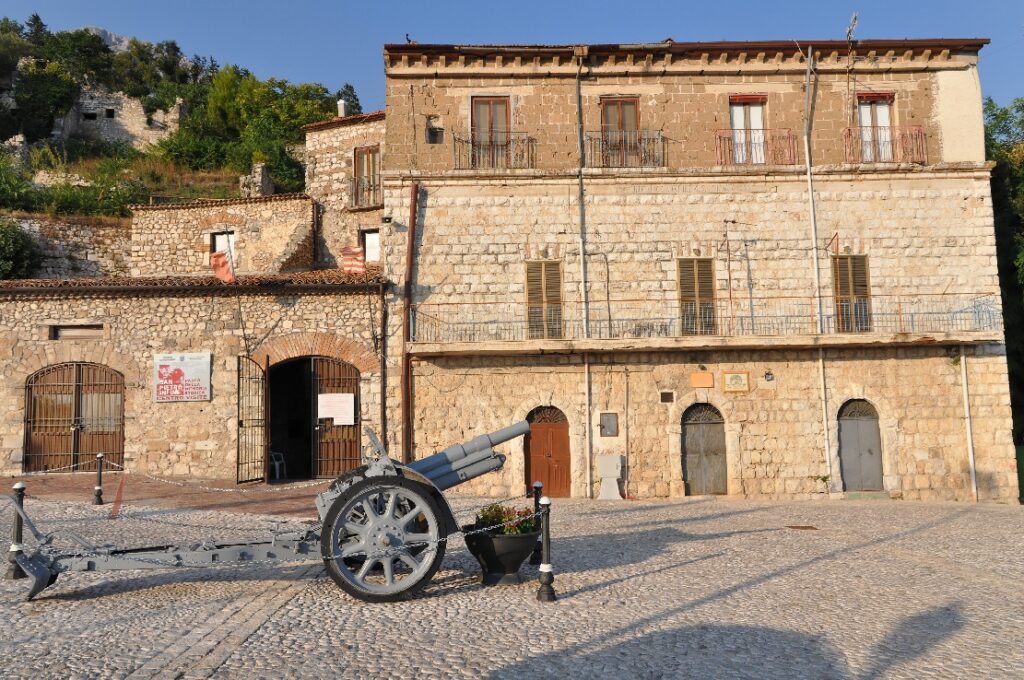
San Pietro Infine
The medieval town, destroyed by the bombardments in 1943, offers visitors the chance to walk around its narrow streets with large steps and houses made of chalkstone. The “caves of the valley” are definitely worth a visit: it is where the people from San Pietro took shelter, after having to dig them with their own hands. Today, the old center is a National Memorial Center, and it is part of the “Park for the Historical Memory”, whose Memorial Museum was designed and built by Officine Rambaldi, under the supervision of Carlo Rambaldi.

Montelungo military Cemetery
The Italian Military Cemetery in Mignano Montelungo hosts 974 graves of the fallen soldiers of the liberation war (1943-45), whose bodies were buried in several war cemeteries spread over the peninsula. General Umberto Utili’s grave is hosted here as well. In the center, there is an impressive chapel with a black marble altar, surmounted by a sculpture by Pietro Canonica, portraying a dying soldier.

Abbazia di Casamari
The Abbey was founded in the eleventh century on the ruins of Cereatae Marianae, the Roman municipality that gave birth to Caio Mario. In the twelfth century, the Cistercians rebuilt the place in the characteristic Gothic – Cistercian style. Inside it, we can admire the squared plan cloister, surrounded by a corridor with a colonnade and mullioned windows. There are also the chapter room, the refectory, the three naves church, and the pharmacy. An important library and a small but precious archaeological museum are hosted too.

Aquino
In the archaeological park of the ancient Aquinum, a stretch of the ancient Via Latina, passing through “Porta San Lorenzo”, can be covered on foot. Are definitely worth a visit the Romanic church “Santa Maria della Libera” built in 1125 and the small medieval suburb, built on a sheer cliff over the charming natural valley.

Gaeta
The city was born during the Roman Age as the harbor of the close Formia and was an independent dukedom from the ninth to the twelfth century. Places of cultural interest are the Angevin-Aragonese Castle, the Cathedral and its bell tower dating back to the twelfth century, the SS Annunziata Shrine and the Golden Cave (sixteenth century), the neogothic church of Saint Francis and the shrine of SS Trinity, near the “Montagna Spaccata” (Split Mountain).

Sperlonga
Sperlonga was a renowned touristic site in the Roman Age, rich in wonderful villas, including that of Emperor Tiberius. It’s a suggestive maritime village built on San Magno hill, characterized by narrow alleys and white houses. It is also famous for having been under Saracens and Turkish sieges.

Atina
According to the legend, it was founded by the god Saturn, and named “patens” by Virgilio. Atina still preserves important archaeological evidence, such as the mighty walls upon the hill of Santo Stefano. The Palazzo Ducale, in gothic style, still well preserved too, was built by the Cantelmo family in 1349, while the cathedral of Santa Maria Assunta rose upon a Roman temple. The Archaeological Museum hosts precious findings from the Prehistoric to Roman Age collected in surrounding areas.
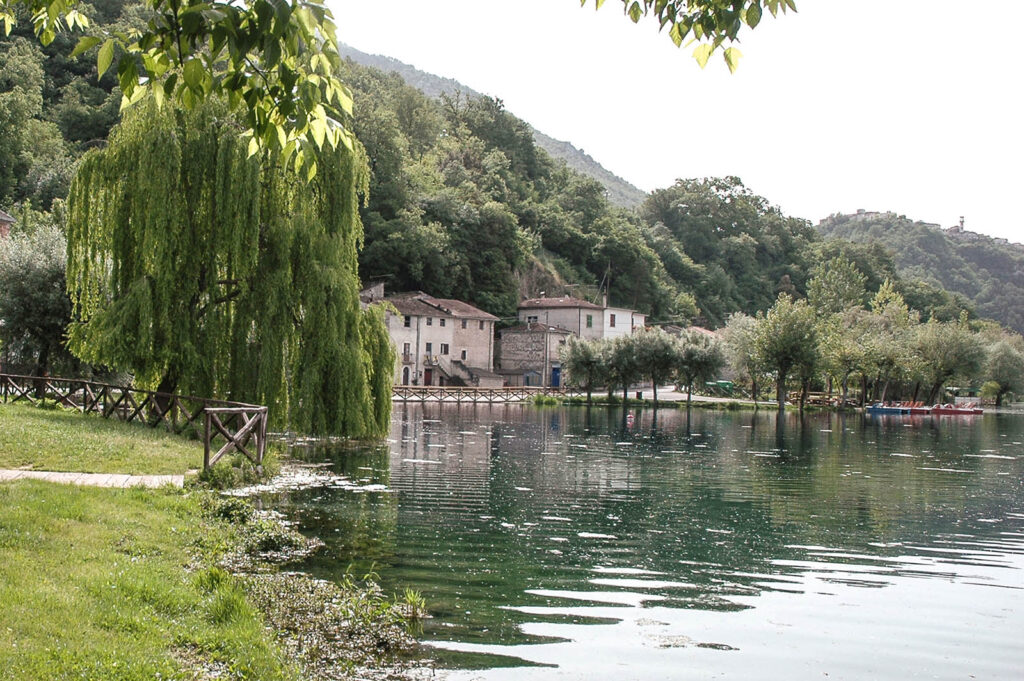
Lake of Posta Fibreno
The Lake of Posta Fibreno became a natural reserve in 1993 and is a wonderful oasis in the heart of the Comino Valley. Its springs, with all-year constant temperatures (10/11°), keep the lacustrine habitat stable. The lake is surrounded by paths that enable you to admire the flora and fauna of the territory. A peculiarity to note is the extraordinary floating island, mentioned by Pliny the Elder in his “Naturalis Historia”. The lake is also rich in the endemic fish species known as Carpione del Fibreno.

Pastena
Pastena, a small village among the green reliefs of the Natural Park of the Aurunci Mountains, is famous for its caves, which are considered one of the main speleological complexes in Italy. Discovered in 1926, the caves lie in a fairy tale scenario crossed by a small river and characterized by many caverns and concretions of karstic origins.